SCI Paper Pipeline
From one idea to a computable governing equation and an SCI-format draft
It does not start from prose. It derives the equations first, checks them numerically, and only then writes the manuscript.
Evidence you can see
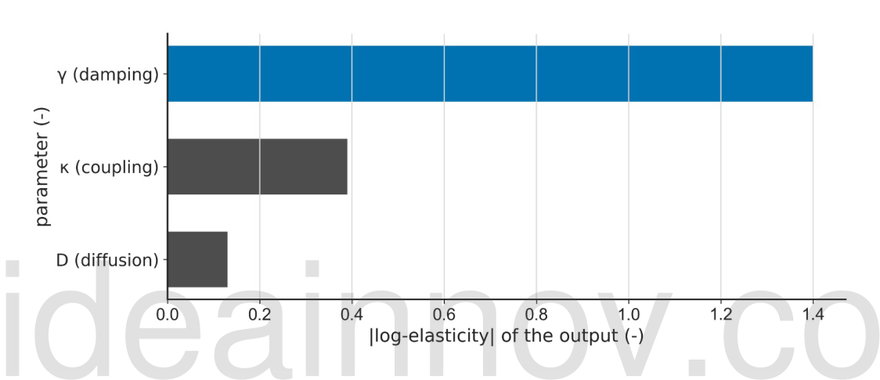
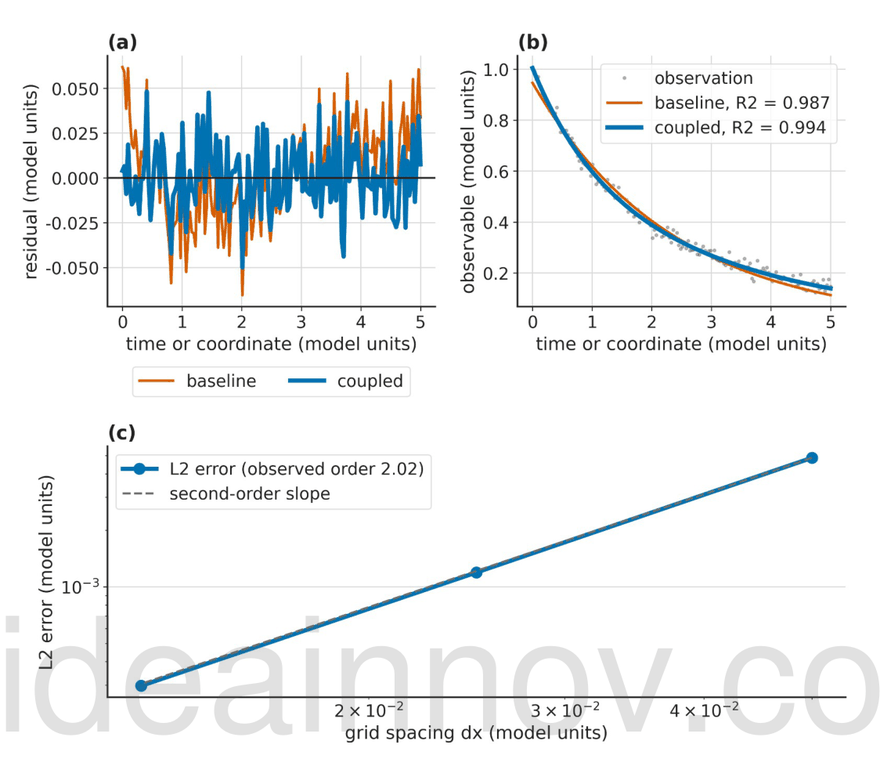
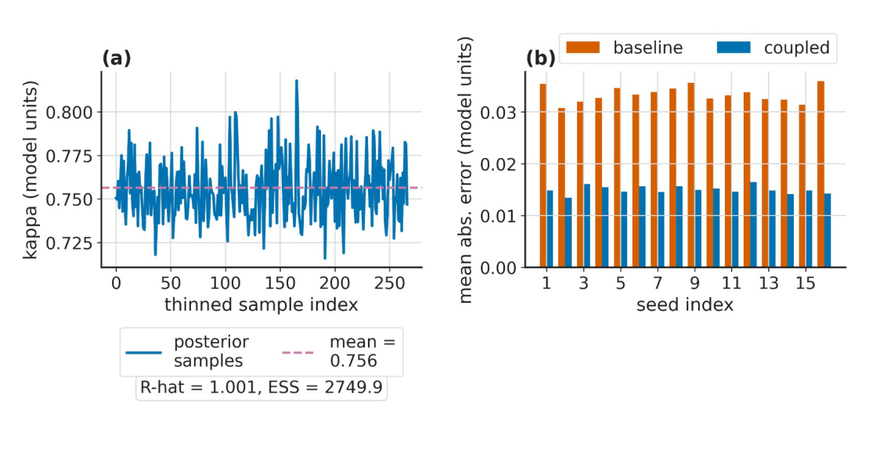
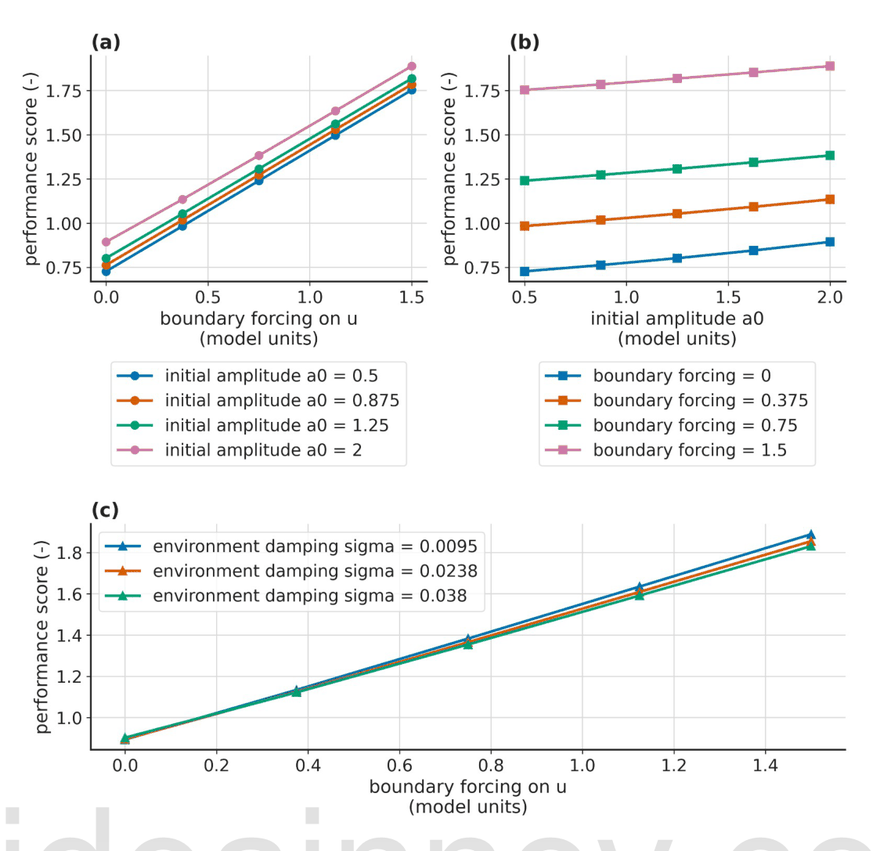
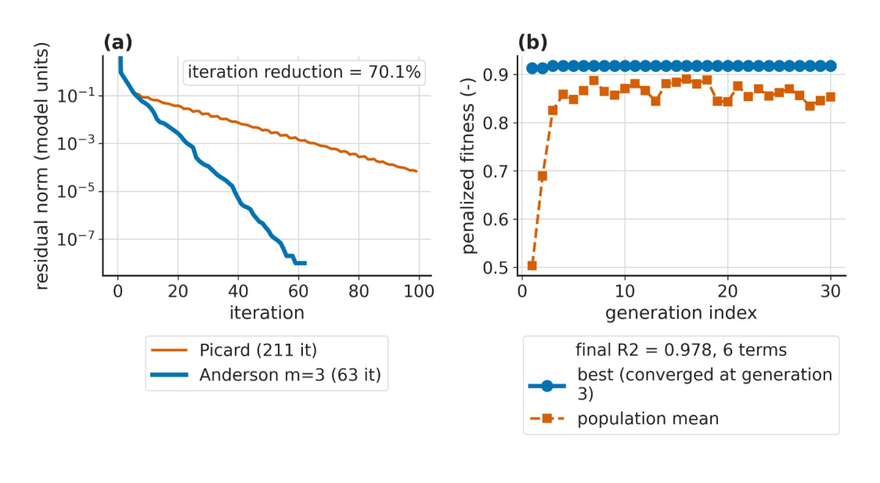
An equation and figures cropped as-is from the public manuscript “Mathematical Modeling and Validation of Convergence Dynamics in Neural Network Loss Optimization” (57 pages).

Eq. (G1) · p. 12 · captured from the PDF render. In the delivered DOCX it is a Word equation (OMML) object you can edit directly.
8 figures from the manuscript
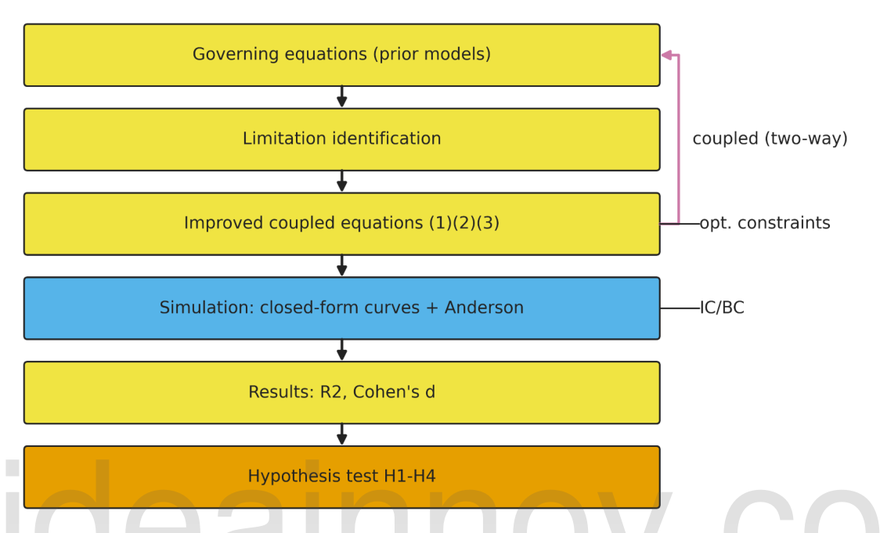
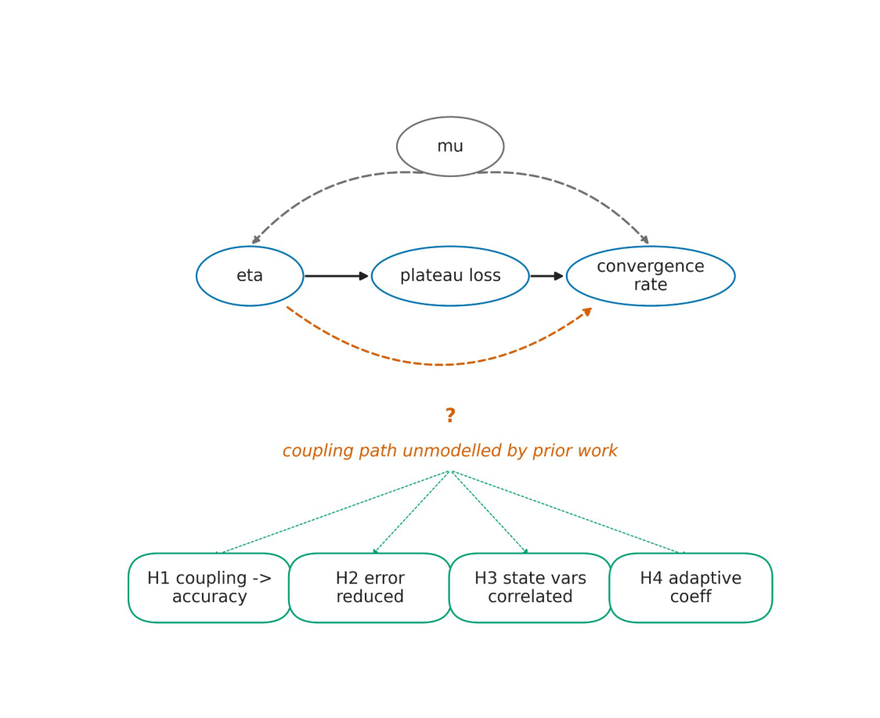
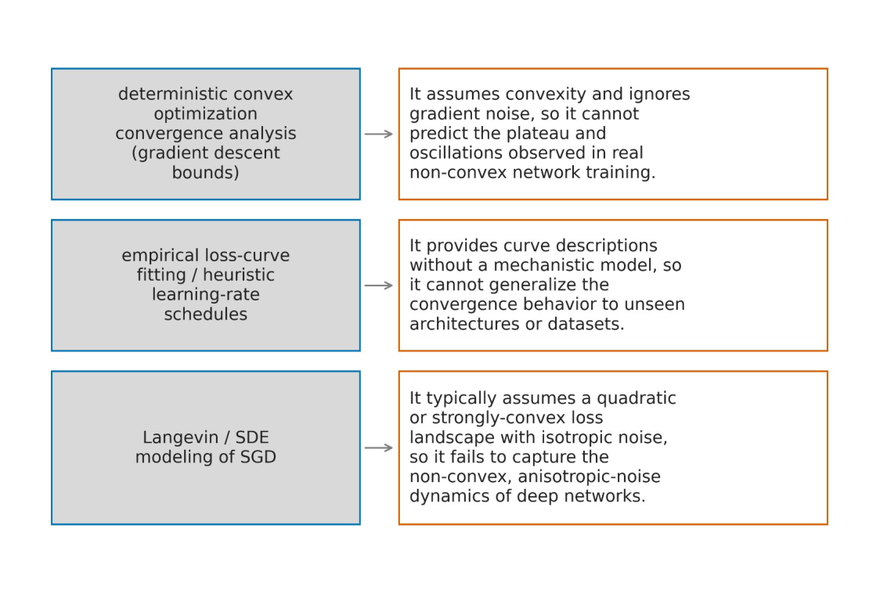
Counted across the 5 public manuscripts
- 53–60pages
- 32–41numbered equations
- 8–10figures
- 8–14tables
- 20–26references
- 8numbered sections
Counted from the PDF text layer (range = min–max per manuscript). Reproduce: python vercel-frontend/scripts/extract_paper_evidence.py
How it works
- InputOne research question, or one source paper (PDF/DOCX/HWPX, ≤20MB / 30 pages).
- DeriveDomain knowledge assembles a coupled PDE system, with the inter-domain coupling constant κ written into the equations.
- ImproveUnknown correction terms are evolved on the baseline equation to raise R². That fit is measured on a fixed-seed synthetic benchmark, and the solver code is checked separately by its manufactured-solution (MMS) grid-convergence order. It is not validation on measured data.
- VerifyThe result is re-checked on four axes — math, experiment, statistics and documentation.
How a draft is judged
Each generated manuscript is judged independently by three judges (manuscript judge, SCI reviewer, editorial check). It is recorded as "goal met" only if at least 2 of the 3 votes pass; otherwise it is delivered marked "needs revision". Hard-problem mode requests also run a 5-member committee stage.
What it does
- Automatically derives coupled PDE systems from a natural-language query or an uploaded PDF/DOCX/HWPX.
- Drafts an academic paper in SCI format (Introduction, Related Work, Hypotheses, Method, Experiments, Results, Discussion, Conclusion).
- Includes editable, numbered OMML equations, figures and tables, and automatic reference citations.
- Automatically evolves unknown correction terms on a baseline equation to raise R² accuracy.
- Several reviewers cross-examine the manuscript, and repeated runs confirm the result does not wobble.
Frequently asked questions
What is the step-by-step process for AI paper generation?
You type one research question or upload a source paper (PDF/DOCX/HWPX). The pipeline runs governing-equation derivation → correction-term evolution → simulation → manuscript writing. Three judges then vote independently, and the draft is recorded as goal met if at least 2 of 3 votes pass.
What does the generated paper include?
A DOCX with editable, numbered OMML equations, figures and tables, and automatic reference citations. Counted across the 5 public manuscripts: 32–41 numbered equations, 8–10 figures, 8–14 tables, 20–26 references and 8 numbered sections.
Is there a free trial?
Just sign up. With no payment details, you get 12 free credits for each of the three programs (paper, proposal, conversion) — 36 total. SCI journal matching is free.
Where do I get my results?
We email them twice (right after generation and about 1 hour later), and you can download them again from the server archive for 24 hours on the free trial or 30 days on a paid plan. With the desktop app, they are kept permanently in the local vault on your PC.